Buyer's Guide
Indian Spice Blends: What Actually Differs Between Garam Masala, Sambar, Rasam and Curry Powders
Buyers new to Indian spice blends sometimes treat "curry powder" as a catch-all term covering everything from garam masala to sambar powder — but each of these five blends is a genuinely distinct product with its own composition, culinary use and buyer base. This guide covers what actually differs between them, so a private-label or bulk enquiry starts from the right blend rather than a generic "Indian spices mix" request.
Written by Shanmukha Raju Y · Reviewed
Sourcing this product? See our Garam Masala, Sambar Powder, Rasam Powder, Madras Curry Powder and Curry Powder product pages for specifications, HS code and MOQ.
Five Blends, Five Different Jobs
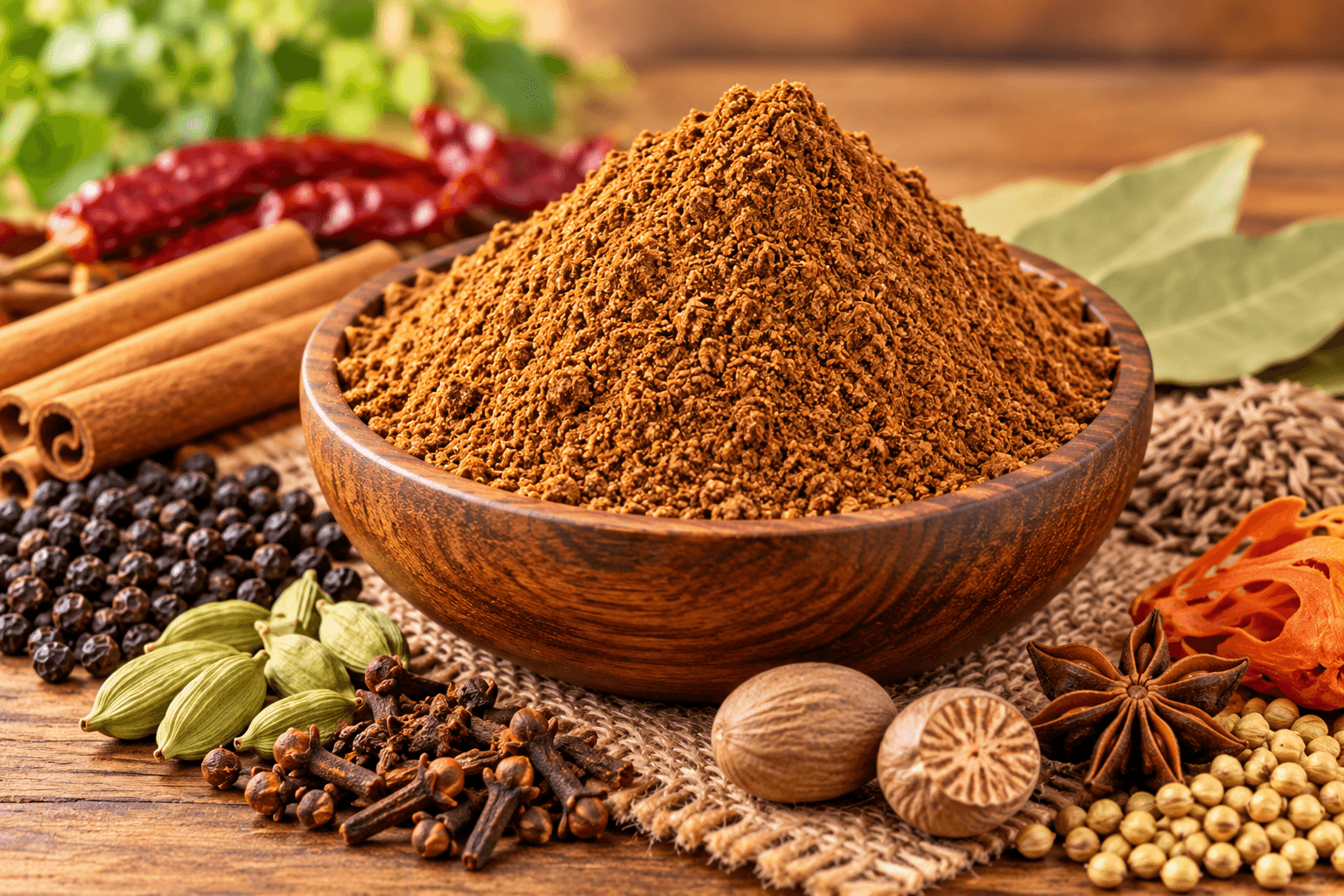
- Garam Masala — a warming, aromatic finishing blend (commonly cinnamon, cardamom, cloves, cumin, coriander and black pepper) added toward the end of cooking; used across North and South Indian cuisines as a general-purpose seasoning rather than tied to one specific dish.
- Sambar Powder — a South Indian blend built around lentils and spices (typically coriander, lentils, red chilli and fenugreek), used specifically in sambar, the everyday South Indian lentil-vegetable stew — not a general seasoning.
- Rasam Powder — a tangy, pepper-forward South Indian blend (black pepper, cumin, coriander and dried red chilli) used in rasam, a thin lentil-tamarind soup distinct from sambar; buyers sometimes confuse the two by cuisine region alone.
- Madras Curry Powder — a turmeric-forward, warmer-profile curry blend named for the Madras (Chennai) region, familiar to UK and European buyers from curry-house menus; a specific regional style, not a synonym for "curry powder" generally.
- Curry Powder — a general-purpose blend formulated to buyer specification (mild, medium or hot) rather than a region-specific named style; the choice for buyers who want a standard curry seasoning without the "Madras" heat and flavour association.
If you're sourcing for a specific dish or retail category — a sambar mix, a rasam mix, a UK-style curry powder — name the blend specifically in your enquiry. "Indian spice blend" or "curry powder" alone can be read several different ways by a supplier quoting five genuinely different formulations.
Standard Blend or Custom Formulation?
Every blend in this range is available as either a standard blend (the supplying partner's default recipe for that blend type) or a custom blend formulated to your specification — heat level, salt content and individual spice ratios adjusted to match an existing recipe or a private-label requirement. A custom formulation typically means a longer lead time for the first batch while the recipe is finalised and a sample approved, so factor that into a first-order timeline rather than assuming a custom blend ships on the same schedule as a standard one.
The One Thing True of All Five: Not Manufactured In-House
As a merchant exporter, we coordinate formulation, quality verification, packaging and export documentation for these blends through verified Indian spice-blending partners — we do not own a blending facility. This is stated plainly rather than implied away because it affects what we can and can't promise on a first order: recipe confirmation and a packaging proof happen before production, not after, the same discipline as any private-label order. See our private label spice sourcing guide for what that process actually looks like.
MOQ and Packaging
All five blends are supplied in retail pouches or bulk PP bags/cartons, with minimum order quantity confirmed per order, formulation and packaging — custom formulations and private-label packaging typically carry a higher MOQ than a standard blend in generic packaging. See our MOQ and container load guide for how packaging format changes minimum order economics.
This guide is general orientation for buyers, not legal, customs or regulatory advice. Requirements change and vary by product, origin and importer type — confirm current rules with your own customs broker or compliance contact before relying on anything here for an actual shipment.
Related Reading
Buyer's Guide
MOQ and Container Loads for Spice & Agri Exports
How MOQ actually works for Indian spice and agri exports — LCL vs FCL, bag sizes, container yield math, and how packaging changes your minimum order.
Buyer's Guide
Private Label Spice Sourcing from India: What to Expect
What happens on a private-label spice order from India — artwork approval, how MOQ compounds, and the difference between a product sample and a packaging proof.
Reference
Spice Grading Terms Glossary
Plain-language definitions of common spice grading terms — SHU, volatile oil, bulk density, foreign matter, and more — for buyers reading a supplier spec sheet.
Product
Garam Masala
Garam masala exporter from India — custom blend for bulk and private label supply
Product
Sambar Powder
Sambar powder exporter from India — South Indian lentil-and-spice blend, bulk and private label
Product
Rasam Powder
Rasam powder exporter from India — South Indian spice blend for bulk and private label supply
Product
Madras Curry Powder
Madras curry powder exporter from India — turmeric-forward blend for bulk and private label supply
Product
Curry Powder
Curry powder exporter from India — general-purpose blend for bulk and private label supply
Get Started
Request a Product Quotation
Share your product requirements, quantity, destination and packaging preferences — we’ll come back with specification, availability and next steps.