Buyer's Guide
Sesame Seeds from India: Natural vs. Hulled, and What to Check
Sesame seeds aren't a single specification any more than "rice" or "millets" are — natural and hulled white sesame serve different buyers, and oil content matters more here than for almost any other product in this catalogue. This guide covers what actually differs between the two forms, the quality parameters worth checking, and the one compliance detail — destination-specific contaminant testing — that buyers sourcing sesame from India most need to plan for.
Written by Shanmukha Raju Y · Reviewed
Sourcing this product? See our Sesame Seeds product page for specifications, HS code and MOQ.
Natural vs. Hulled White Sesame — What Actually Differs
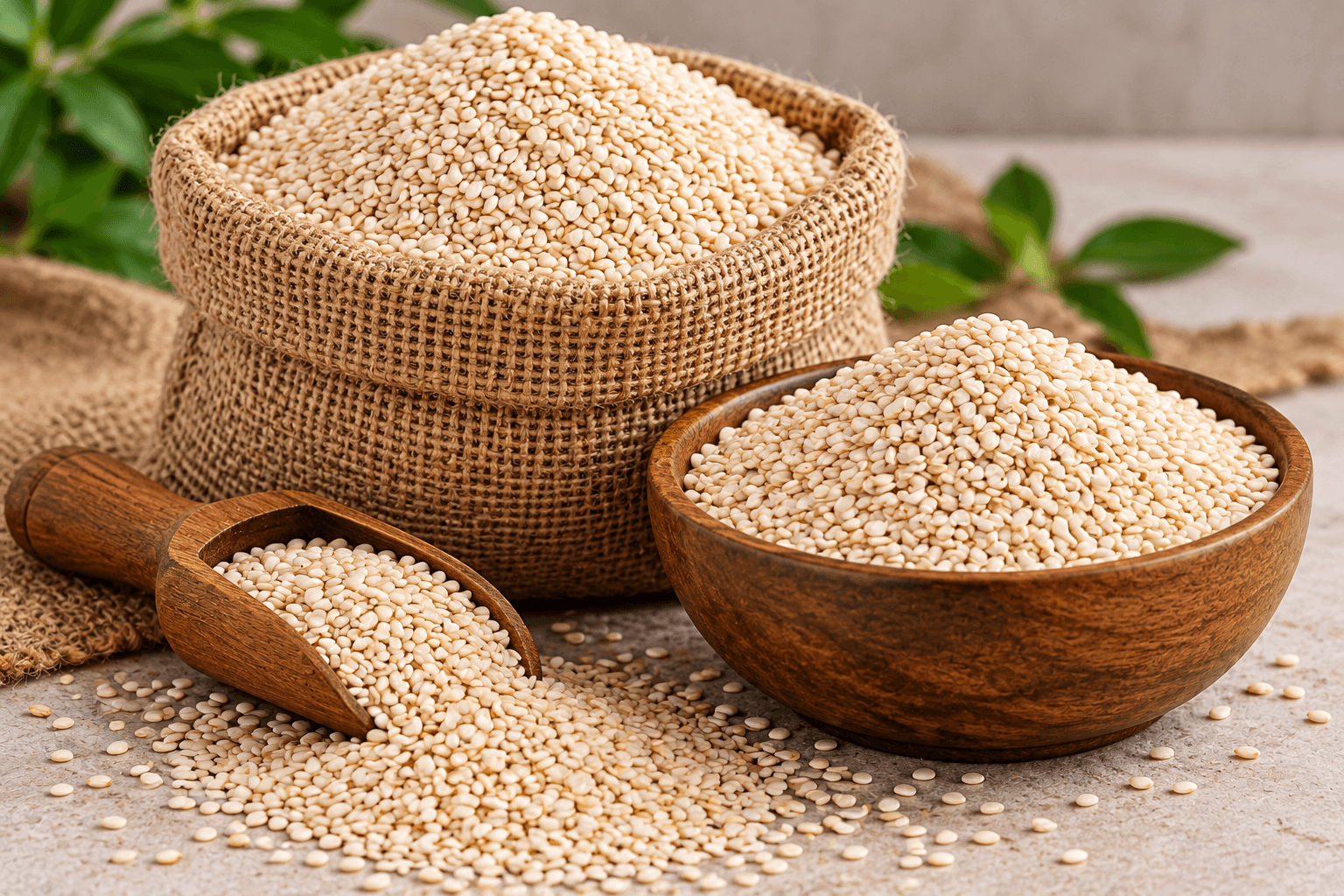
- Natural sesame seeds — unprocessed, with the outer hull intact; retains a light tan-to-brown colour and a stronger, nuttier flavour, commonly used for oil extraction, bakery topping and tahini where the hull's flavour and texture are wanted rather than removed.
- Hulled white sesame seeds — mechanically or chemically de-hulled to a uniform white/ivory colour and milder flavour; the more common choice for confectionery, bakery products where visual uniformity matters, and premium tahini.
Oil content and flavour intensity both shift with hulling, so confirm which form your recipe or finished product actually needs — an order expecting hulled white that receives natural seeds will show up immediately in appearance, not just on inspection.
The Numbers That Matter
| Parameter | Typical Range |
|---|---|
| Purity | ≥ 99% |
| Oil content | 48% – 52% |
| Moisture | ≤ 6% |
| Foreign matter | ≤ 1% |
Oil content is the parameter buyers sourcing for oil extraction or tahini care about most directly — confirm it's tested per lot rather than assumed from a general spec sheet, since oil content genuinely varies by harvest and growing conditions, the same way curcumin content does for turmeric.
Destination-Specific Testing Is Worth Planning For
Sesame seeds from India have, at various times, faced increased-frequency official testing at some destination borders tied to contaminant findings — the EU is one market where this has applied, as covered in our EU spice import labelling guide. This isn't unique to any one supplier or shipment; it's a border-control measure applied to the product-and-origin combination itself, reviewed and updated periodically. If you're importing into a market with this kind of increased-checks history, ask your supplier for current lot-specific test results before shipment rather than assuming a general specification sheet covers it, and confirm the current requirement with your own customs broker, since these lists change.
MOQ and Packaging
Sesame seeds are typically supplied in 25–50 kg bulk PP bags for wholesale, oil-extraction and food-manufacturing buyers, with retail pouches available on request for smaller trial or direct-to-shelf orders. Minimum order quantity is confirmed per order, grade and destination — see our MOQ and container load guide for how packaging format changes minimum order economics.
This guide is general orientation for buyers, not legal, customs or regulatory advice. Requirements change and vary by product, origin and importer type — confirm current rules with your own customs broker or compliance contact before relying on anything here for an actual shipment.
Sourcing Sesame Seeds?
Related Reading
Buyer's Guide
MOQ and Container Loads for Spice & Agri Exports
How MOQ actually works for Indian spice and agri exports — LCL vs FCL, bag sizes, container yield math, and how packaging changes your minimum order.
Buyer's Guide
Incoterms for First-Time Spice Importers
A plain-language guide to FOB, CFR, and CIF for spice importers from India — what each term includes, and why the same price can mean different costs.
Compliance Reference
Importing Spices into the EU: Labelling and Compliance Basics
A general orientation to EU import requirements for spices and agri products — what typically needs review, and why destination-specific checks still matter.
Product
Sesame Seeds
Sesame seed exporter from India — natural and hulled white sesame
Get Started
Request a Product Quotation
Share your product requirements, quantity, destination and packaging preferences — we’ll come back with specification, availability and next steps.