Buyer's Guide
Tamarind from India: Pulp, Pods and Concentrate — What to Check
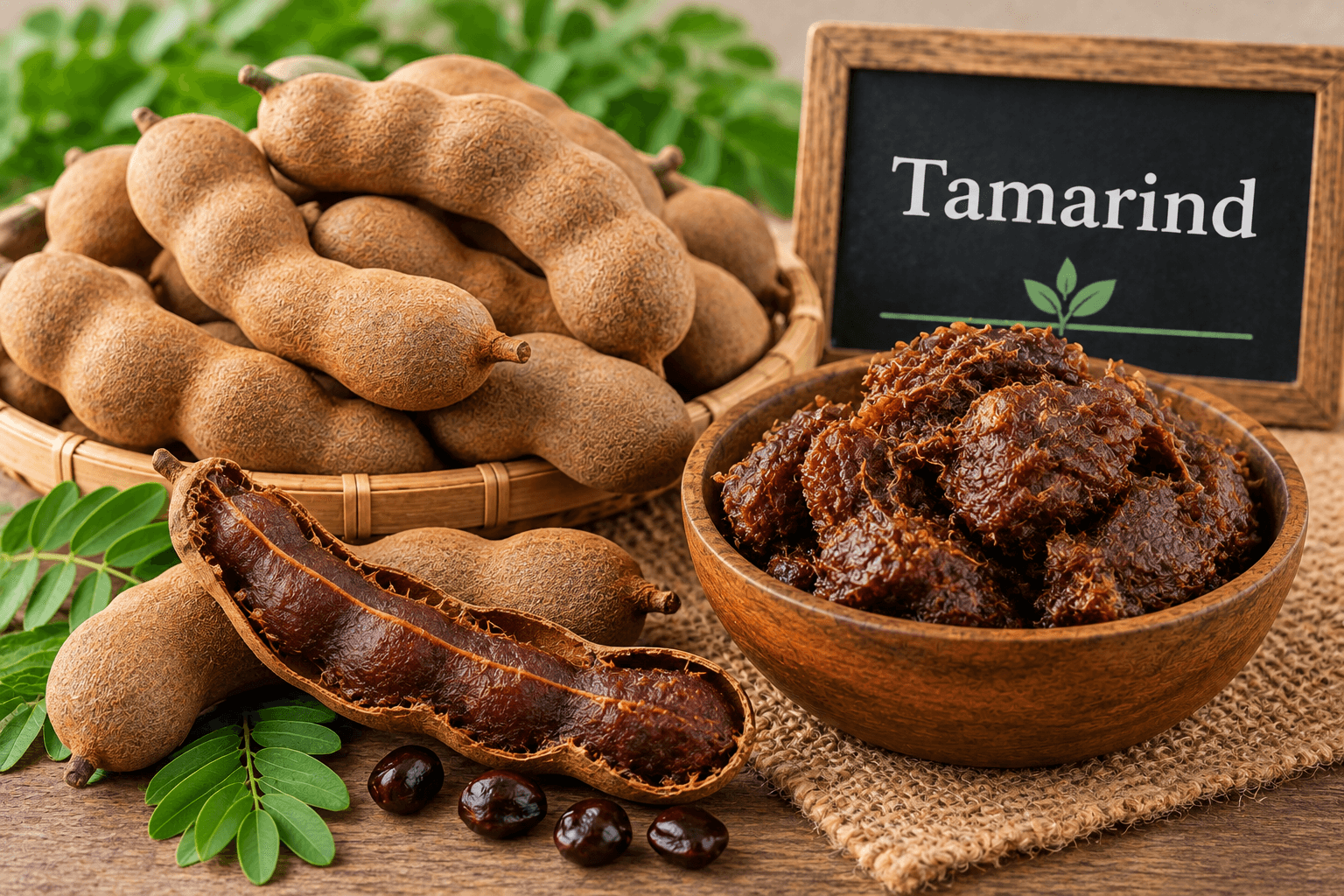
Tamarind isn't a single specification any more than "rice" or "sesame" are — seedless pulp, whole pods and concentrate serve genuinely different buyers and processing needs, not just different price points on the same product. This guide covers what actually differs between the three forms, the quality parameters worth checking, and one distinction — raw commodity vs. processed product — that's worth confirming before assuming the same paperwork covers all three.
Written by Shanmukha Raju Y · Reviewed
Sourcing this product? See our Tamarind product page for specifications, HS code and MOQ.
Seedless Pulp, Whole Pods and Concentrate — What Actually Differs
- Seedless tamarind pulp (blocks) — deseeded and deveined pulp pressed into blocks; the most common form for food manufacturers and sauce/paste producers who still do their own diluting, straining and cooking.
- Whole tamarind pods — unprocessed pods with seed and fibre intact; sold mainly to ethnic-food retailers and buyers who process it themselves or want the traditional whole-pod presentation for retail.
- Tamarind concentrate — pre-extracted, seed- and fibre-free liquid or paste concentrate, ready to dilute; suited to buyers who don't want to run their own extraction step, typically at a higher per-kg cost than pulp blocks.
Confirm which form your recipe or retail format actually needs at enquiry stage — a sauce manufacturer expecting ready-to-dilute concentrate who receives seedless pulp blocks still has a full extraction step ahead of them, not a finished ingredient.
The Numbers That Matter
| Parameter | Typical Range |
|---|---|
| Moisture (pulp block) | ≤ 20% |
| Tartaric acid | 8% – 14% |
| Seed & fibre content (seedless pulp) | ≤ 3% |
Tartaric acid is the compound responsible for tamarind's characteristic sourness and the main quality indicator on a tamarind spec sheet — see our spice grading terms glossary for how it's defined alongside other quality terms used across this catalogue. Moisture and seed/fibre content apply specifically to seedless pulp blocks; whole pods and concentrate are confirmed against different parameters at the enquiry stage.
Raw Commodity or Processed Product? Confirm It Changes the Paperwork
Whole tamarind pods are a raw agricultural commodity, while seedless pulp and concentrate are lightly processed — deseeded, deveined, and in concentrate's case, extracted and reduced. This distinction can affect which documentation and food-safety category a shipment falls under at destination customs, not just on the Indian export side. Confirm with your customs broker whether your specific destination treats processed tamarind pulp or concentrate differently from the whole-pod raw commodity for import documentation purposes, rather than assuming the same paperwork covers both.
MOQ and Packaging
Tamarind is supplied in retail pouches or cartons for direct retail buyers and 20–25 kg poly-lined cartons for wholesale and food-processing buyers, with minimum order quantity confirmed per order, form and destination — see our MOQ and container load guide for how packaging format changes minimum order economics.
This guide is general orientation for buyers, not legal, customs or regulatory advice. Requirements change and vary by product, origin and importer type — confirm current rules with your own customs broker or compliance contact before relying on anything here for an actual shipment.
Related Reading
Buyer's Guide
MOQ and Container Loads for Spice & Agri Exports
How MOQ actually works for Indian spice and agri exports — LCL vs FCL, bag sizes, container yield math, and how packaging changes your minimum order.
Reference
Spice Grading Terms Glossary
Plain-language definitions of common spice grading terms — SHU, volatile oil, bulk density, foreign matter, and more — for buyers reading a supplier spec sheet.
Reference
Common Export Documentation Checklist
A one-page reference to the documents that typically accompany an India spice or agri export shipment, and what each one is actually for.
Product
Tamarind
Tamarind exporter from India — seedless pulp, whole pods and concentrate
Get Started
Request a Product Quotation
Share your product requirements, quantity, destination and packaging preferences — we’ll come back with specification, availability and next steps.