Buyer's Guide
Coriander Seeds from India: Grades, Uses, and What to Check
Coriander is one of the more straightforward spices to source, but “straightforward” only holds if you're asking for the right numbers. Here's what a coriander specification should actually include before you place an order.
Written by Raju Y.
- 3 min
- Reading time
- 5
- Sections
- 4
- Questions answered
- 15 Sept 2026
- Last reviewed
In this guide
Sourcing this product? See our Coriander product page for specifications, HS code and MOQ.
At a glance
The Numbers That Matter
Moisture
≤ 10%
Volatile oil
≥ 0.3%
Where It's Sourced and Why That's Worth Asking
Coriander is grown across several Indian states, with Rajasthan and Tamil Nadu among the established sourcing regions. Growing conditions affect seed size, aroma intensity, and oil content, so it's worth asking which region a specific lot comes from rather than treating “Indian coriander” as a single uniform product.
The Numbers That Matter
| Parameter | Typical Range |
|---|---|
| Moisture | ≤ 10% |
| Volatile oil | ≥ 0.3% |
Volatile oil content is the figure most directly tied to aroma strength, and it's the one buyers most often forget to ask for — moisture alone doesn't tell you whether the seed will actually smell and taste the way you expect in a finished product.
Extraction Buyers vs. Whole-Seed Buyers
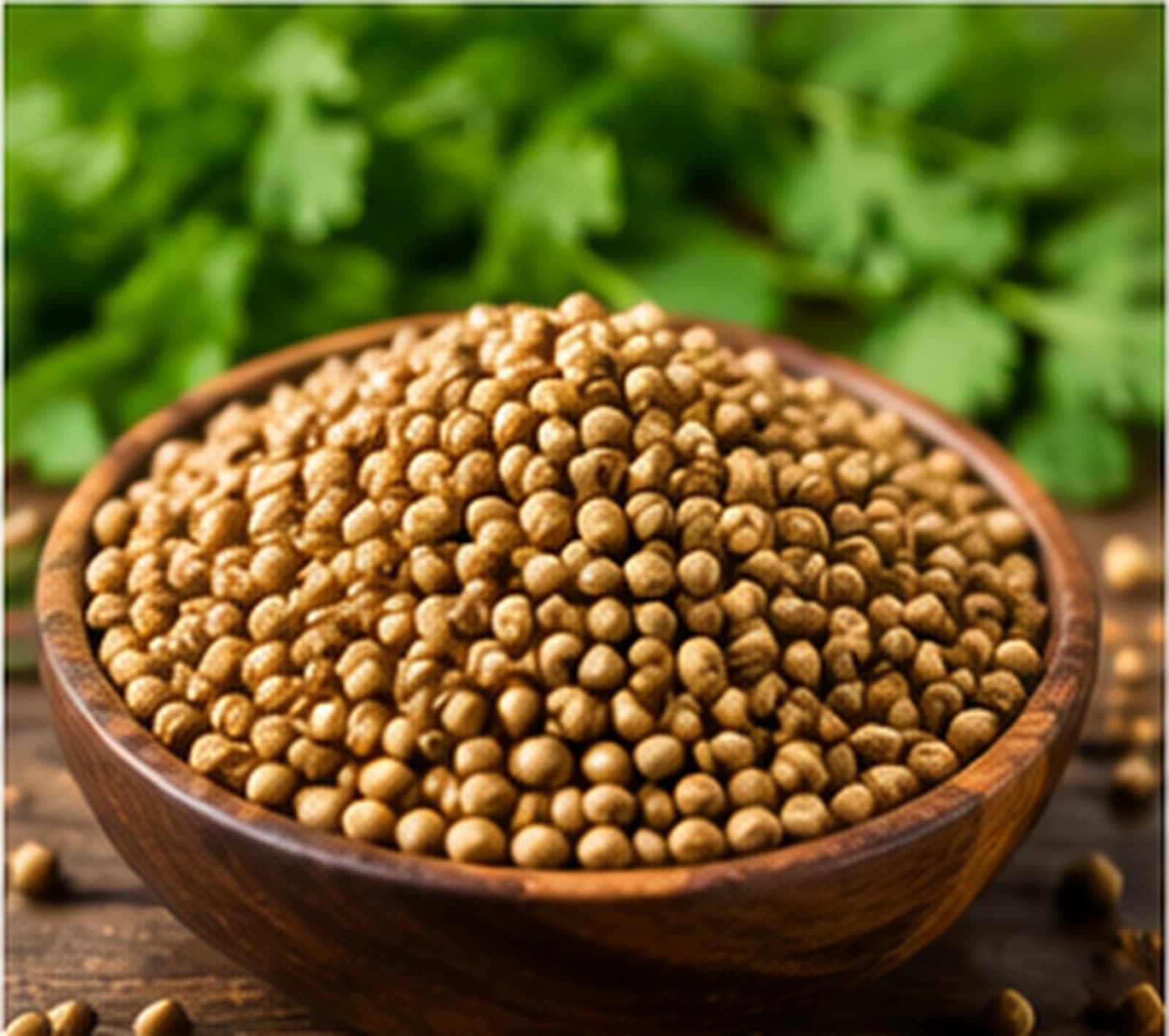
Coriander is traded whole, split or ground, and is also used as raw material for oleoresin and essential oil extraction. Extraction and flavour buyers weight volatile oil content most heavily; retail and food-service buyers usually put more weight on appearance, seed colour and purity, meaning freedom from other seeds and admixture.
Regional names for coriander are trade conventions, not a formal grading standard. Ask for the numbers above on the actual lot, and agree the lab and method in advance.
Whole Seeds vs. Ground Powder
Whole coriander seeds hold their aroma substantially longer than ground powder, which is why most bulk buyers import whole and grind closer to point of use if they have the capability. If you need ground coriander, ask about milling date and how the powder has been stored — coriander powder loses aromatic strength faster than many other ground spices.
Getting Started
As with other spices in this range, a first order around 100 kg is a common trial quantity, with packaging (retail pouch or bulk PP bag) and destination determining how that scales toward a full container — worth reading alongside our MOQ and container load guide before finalizing a quantity.
Frequently Asked Questions
Where is Indian coriander sourced from?
Several states, with Rajasthan and Tamil Nadu among the established sourcing regions. Growing conditions affect seed size, aroma intensity and oil content, so ask which region a specific lot comes from.
What specifications matter for coriander seeds?
Moisture (≤ 10%) and volatile oil (≥ 0.3%). Volatile oil is the figure most directly tied to aroma strength, and the one buyers most often forget to ask for.
Should I import whole coriander seeds or powder?
Whole seeds hold their aroma substantially longer, which is why most bulk buyers import whole and grind closer to point of use. Coriander powder loses aromatic strength faster than many other ground spices — if you need it, ask about milling date and storage.
What is a typical first order quantity for coriander?
Around 100 kg is a common trial quantity, in retail pouches or 25 kg bulk PP bags, with destination and packaging determining how that scales toward a container.
This guide is general orientation for buyers, not legal, customs or regulatory advice. Requirements change and vary by product, origin and importer type — confirm current rules with your own customs broker or compliance contact before relying on anything here for an actual shipment.
Related Reading
Product
Coriander
Coriander supplier India — whole seeds and ground powder
Buyer's Guide
How to Import Turmeric from India
A practical guide for buyers importing turmeric from India — sourcing regions, quality parameters, HS codes, MOQ, container math, and export documentation.
Read guide →Buyer's Guide
MOQ and Container Loads for Spice & Agri Exports
How MOQ actually works for Indian spice and agri exports — LCL vs FCL, bag sizes, container yield math, and how packaging changes your minimum order.
Read guide →Get Started
Request a Product Quotation
Share your product requirements, quantity, destination and packaging preferences — we’ll come back with specification, availability and next steps.