Product Guide
Coco Peat vs. Coir Pith: What's the Difference?
“Coco peat” and “coir pith” get used interchangeably often enough that buyers reasonably assume they're the same thing with two names. They're closely related — but not the same product, and the difference matters if you're buying for horticulture specifically.
Written by Raju Y.
- 4 min
- Reading time
- 5
- Sections
- 3
- Questions answered
- 15 Sept 2026
- Last reviewed
In this guide
Sourcing this product? See our Coco Peat & Coir Pith product page for specifications, HS code and MOQ.
At a glance
Same Raw Material, Different Processing
Coir Pith
Raw, bulk form
- EC (salt content)
- Higher — unwashed
- Particle size
- Variable, ungraded
- Best for
- Soil conditioning, mulching, industrial use
Coco Peat
Washed, buffered, graded
- EC (salt content)
- Low, controlled
- Particle size
- Sieved, consistent
- Best for
- Nursery, greenhouse, hydroponic growing
Where Both Start: The Same Raw Material
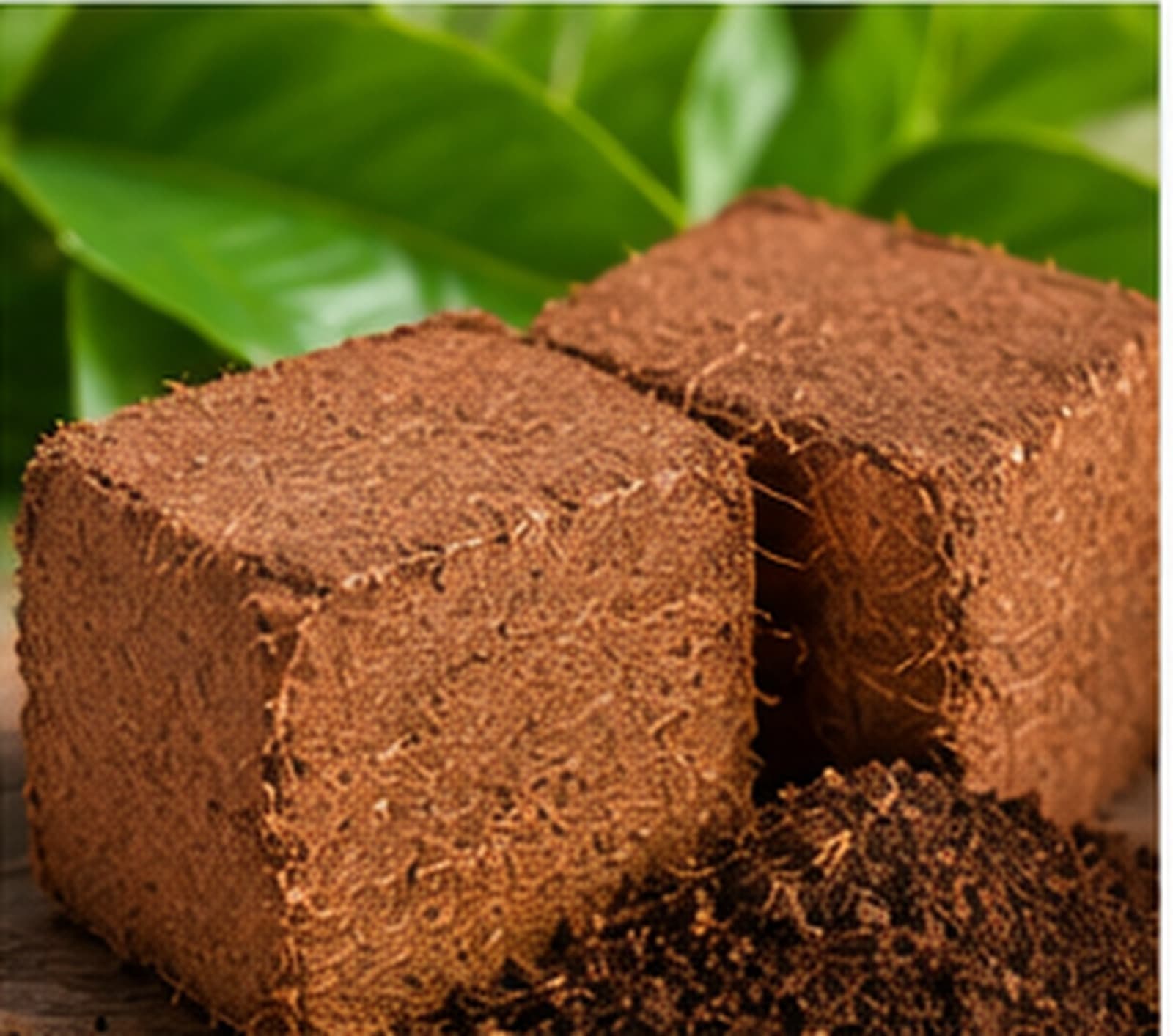
Coconut husks are processed to extract long coir fibres, used for ropes, mats, and brushes. What's left behind after fibre extraction is a spongy, powdery byproduct — this is coir pith in its rawest form. Coco peat is, at its core, a processed and graded version of that same byproduct. So the honest starting point is: coco peat comes from coir pith, not from a separate material. The difference is what happens to it after extraction.
Coir Pith: The Raw, Bulk Form
- Sold loose or in bulk compressed bales, rather than uniform blocks
- Variable in particle size and moisture content, since it hasn't been sieved or graded
- Higher in electrical conductivity (EC) — a measure of salt content — because the retting process used to loosen coir fibres from the husk often involves prolonged soaking, which leaves behind sodium and potassium salts
- Suited to bulk and commercial applications where EC and particle uniformity matter less: soil conditioning, mulching, industrial absorbent use, and similar large-scale applications
If your use case doesn't require tightly controlled growing conditions, raw or lightly processed coir pith is often the more cost-effective choice — you're not paying for processing steps your application doesn't need.
Coco Peat: The Processed, Horticulture-Grade Form
Coco peat takes that same raw material through additional processing steps specifically aimed at making it safe and effective as a growing medium.
- Washing — reduces salt content and loose debris
- Buffering — treating the material (commonly with a calcium-based solution) to release sodium and potassium ions bound to the coir fibre and replace them with calcium, lowering EC further and improving nutrient availability
- Sieving and grading — produces a consistent particle size, important for even water retention and aeration
- Compression — into blocks, briquettes, or discs for easier shipping and storage, which expand significantly once rehydrated
The result is a material with low, controlled EC, consistent texture, and reliable water-holding capacity — the properties that make it useful as a standalone growing medium or a component in potting mixes.
Why EC and Buffering Actually Matter
This is the detail that separates a usable growing medium from one that can harm plants. Unprocessed or poorly buffered coco peat can carry enough residual sodium and potassium to interfere with nutrient uptake, particularly for salt-sensitive crops or seedlings. If you're buying for horticultural or nursery use, EC level and buffering status aren't optional details to skip past.
If you're unsure which grade you're being quoted, ask directly for the EC value and whether the material has been buffered. A supplier who can't answer either question is likely quoting raw pith regardless of what it's labeled.
Which One Do You Need?
- Buying for a nursery, greenhouse, or hydroponic setup? You need coco peat — washed, buffered, and graded. Raw coir pith will likely cause plant stress from residual salts.
- Buying for large-scale soil amendment, mulching, or an industrial application where plant sensitivity isn't a factor? Raw or lightly processed coir pith is usually the more economical fit.
- Not sure which category your use case falls into? Describe the end application to your supplier rather than requesting by product name alone — the terms are used inconsistently enough across the industry that the application is the more reliable way to get the right grade.
Frequently Asked Questions
Is coco peat the same as coir pith?
They come from the same coconut-husk byproduct, but they're not interchangeable. Coir pith is the raw, ungraded bulk form with variable particle size and higher salt content. Coco peat is that material washed, buffered, sieved and compressed into a horticulture-grade growing medium.
What does EC mean for coco peat?
Electrical conductivity is a measure of salt content. Raw pith carries sodium and potassium from the retting process; washing and buffering lower it. High EC can interfere with nutrient uptake, so for nursery or hydroponic use ask for the EC value and whether the material has been buffered.
Which one do I need?
Nursery, greenhouse or hydroponic use needs washed, buffered and graded coco peat — raw coir pith will likely cause plant stress from residual salts. Large-scale soil amendment, mulching or industrial absorbent use is usually better served by raw or lightly processed coir pith. If unsure, describe the end application rather than ordering by name.
This guide is general orientation for buyers, not legal, customs or regulatory advice. Requirements change and vary by product, origin and importer type — confirm current rules with your own customs broker or compliance contact before relying on anything here for an actual shipment.
Sourcing Coco Peat & Coir Pith?
Related Reading
Product
Coco Peat & Coir Pith
Coco peat supplier India — coir pith exporter for horticulture and growing media
Buyer's Guide
MOQ and Container Loads for Spice & Agri Exports
How MOQ actually works for Indian spice and agri exports — LCL vs FCL, bag sizes, container yield math, and how packaging changes your minimum order.
Read guide →Buyer's Guide
Choosing Export Packaging by Destination
How to choose spice and agri export packaging by buyer type and destination — pouches, bulk bags, private label, and what changes for humid or long routes.
Read guide →Compliance Reference
Importing Spices and Agri Products into Australia: Biosecurity Basics
A general orientation to Australia's biosecurity import conditions for spices, rice and coco peat — why BICON matters and treatment may be required.
Read guide →Product Guide
Coco Peat Export Guide: Specifications, Packing and Documents
What an importer should agree before buying coco peat from India: EC and pH, washing and buffering, block formats, container loading, testing and the documents that usually apply.
Read guide →Get Started
Request a Product Quotation
Share your product requirements, quantity, destination and packaging preferences — we’ll come back with specification, availability and next steps.