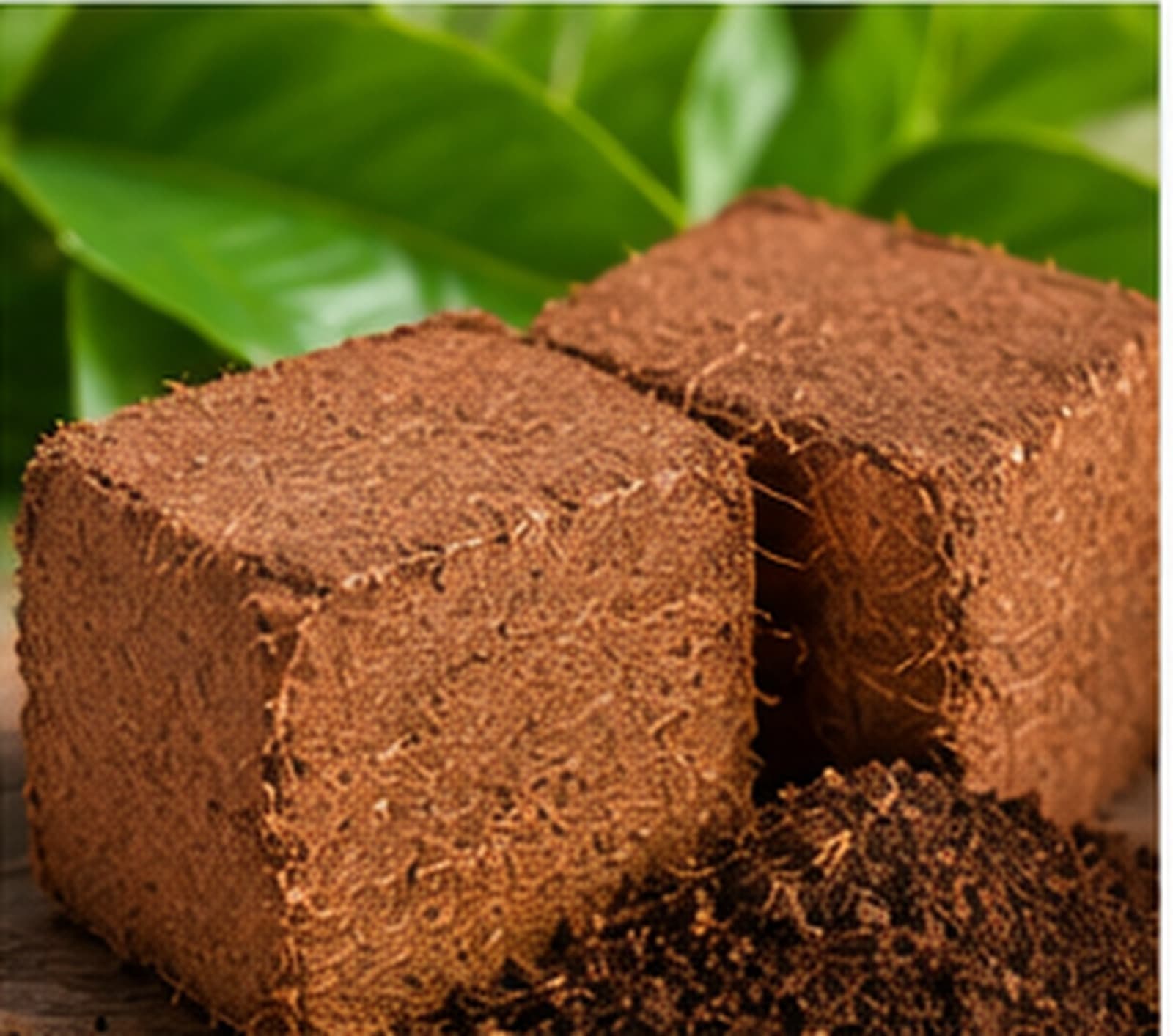
Coco Peat & Coir Pith
Coco Peat & Coir Pith Exporter from India
Coco peat supplier India — coir pith exporter for horticulture and growing media
Product at a Glance
- Category
- Coco Peat & Coir Pith
- Botanical / Scientific Name
- Cocos nucifera-derived coir pith
- Country of Origin
- India
- Growing Region
- Tamil Nadu / Kerala
- HS Code
- 53050040
- Supply Format
- Compressed block and bulk export formats
- Packaging Options
- Shrink-wrapped compressed block, Bulk bale — subject to availability
- Minimum Order Quantity
- 1 container load (indicative — confirmed per order and destination)
Pack Sizes
Initial quotation response commitment: within one working day, Monday–Saturday IST.
Download Technical Spec Sheet (PDF)Origin & Authenticity
Why Buy From India?
Coco peat and coir pith sourced from coconut-husk processing units in South India, supplied in block, washed and grow-bag formats for horticultural, greenhouse and commercial growing-media buyers. EC, pH, moisture, expansion volume, compression and fibre content vary by supplier and buyer requirement, and are confirmed directly with the supplying source before order confirmation — figures are not published without that verification.
Sourcing & Quality Process
From Tamil Nadu to your destination port — every order moves through supplier verification, quality coordination and export packing before dispatch.
Product Range
Available Forms
- Coco Peat Blocks
- Coir Pith Blocks
- Washed Coco Peat
- Low EC Coco Peat
- Compressed Coco Peat
- Coco Peat Grow Bags
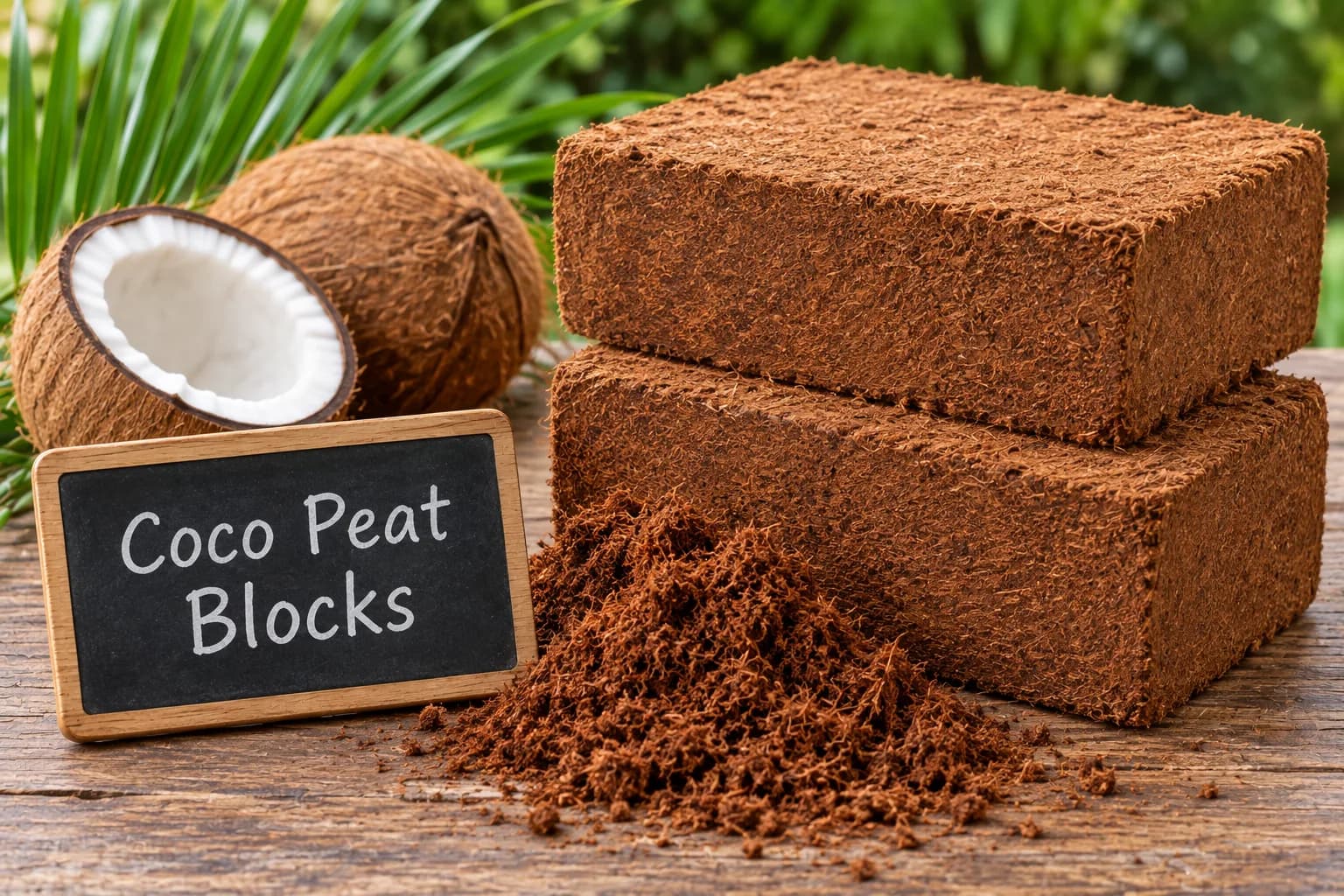
Coco Peat Blocks
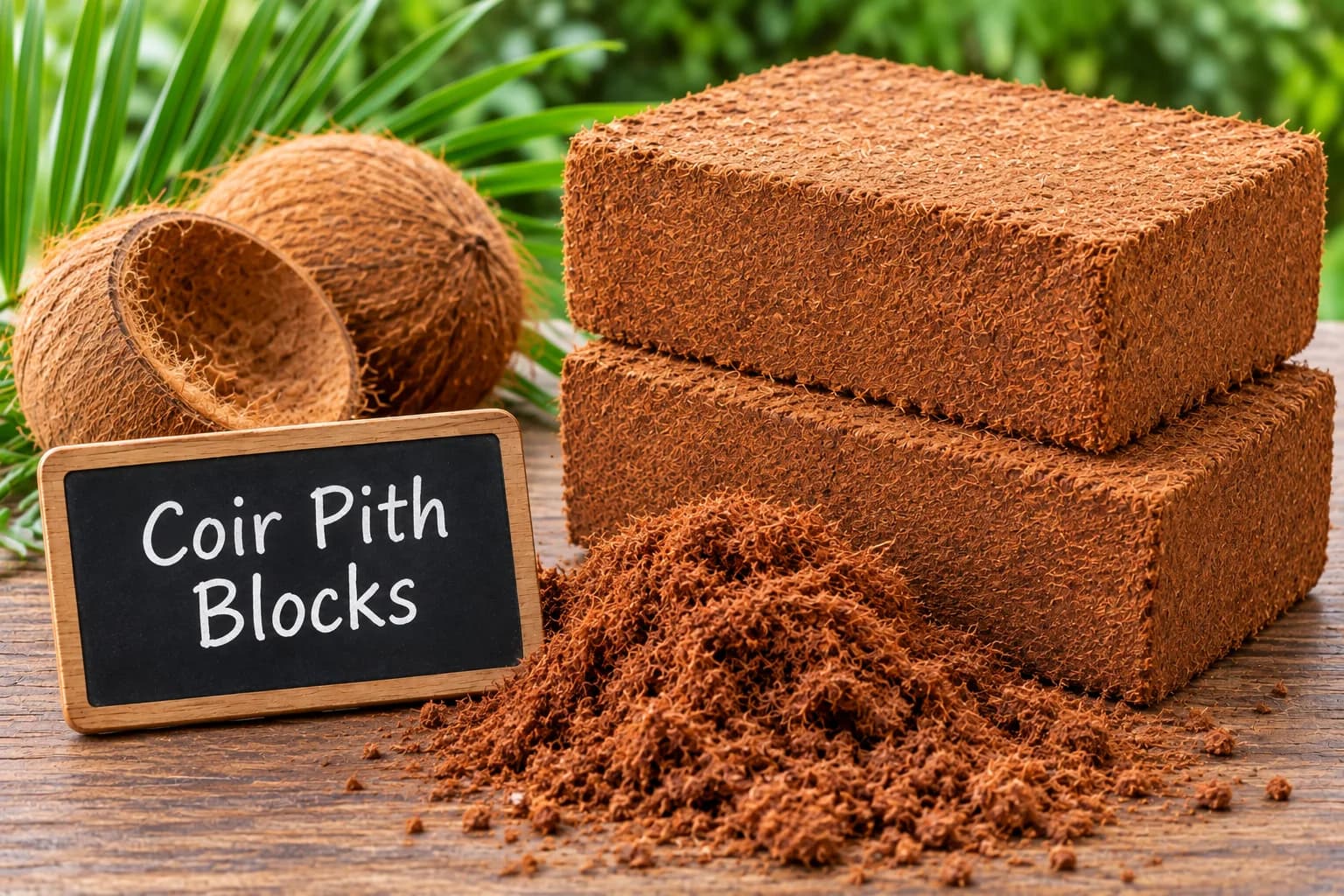
Coir Pith Blocks
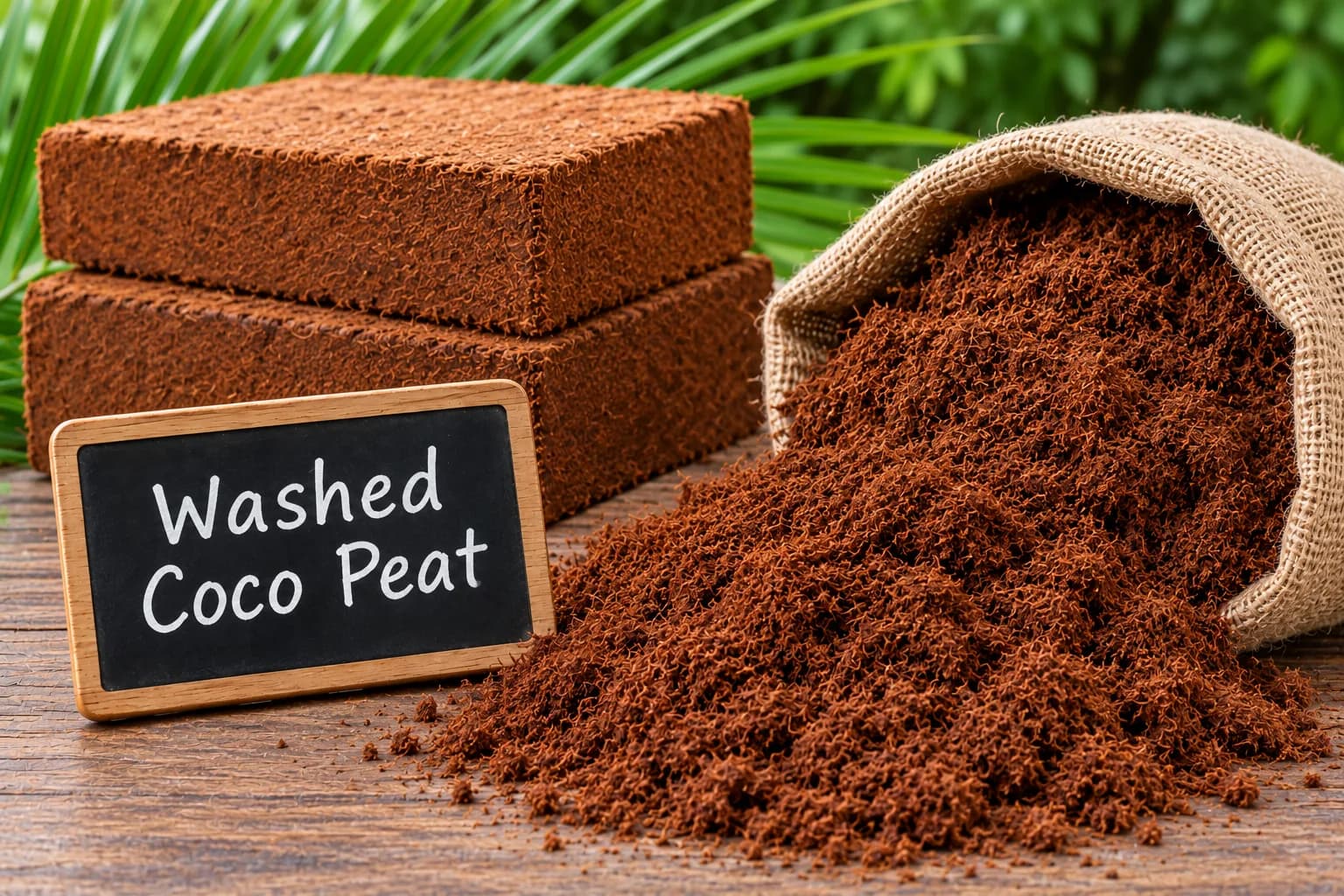
Washed Coco Peat
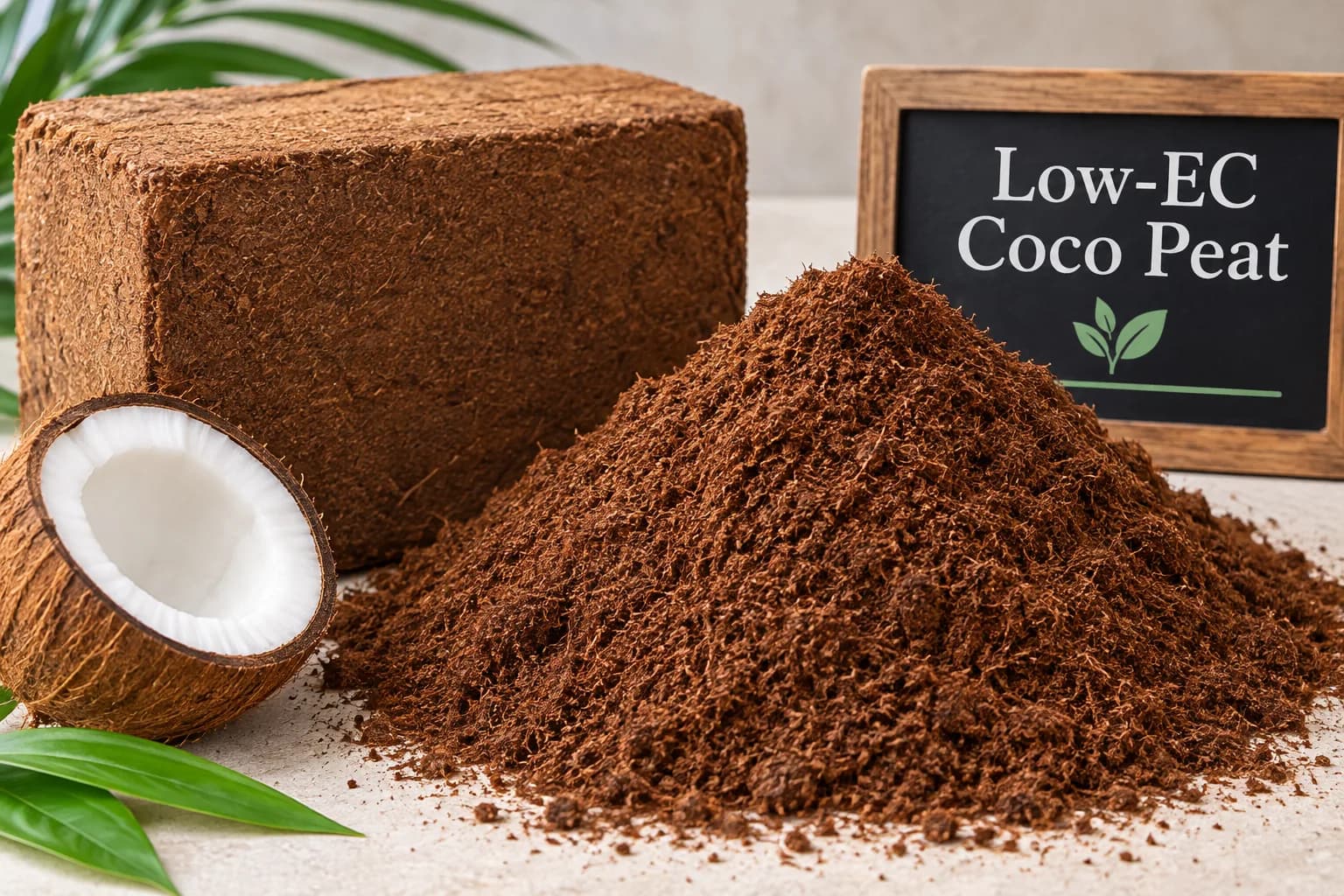
Low EC Coco Peat
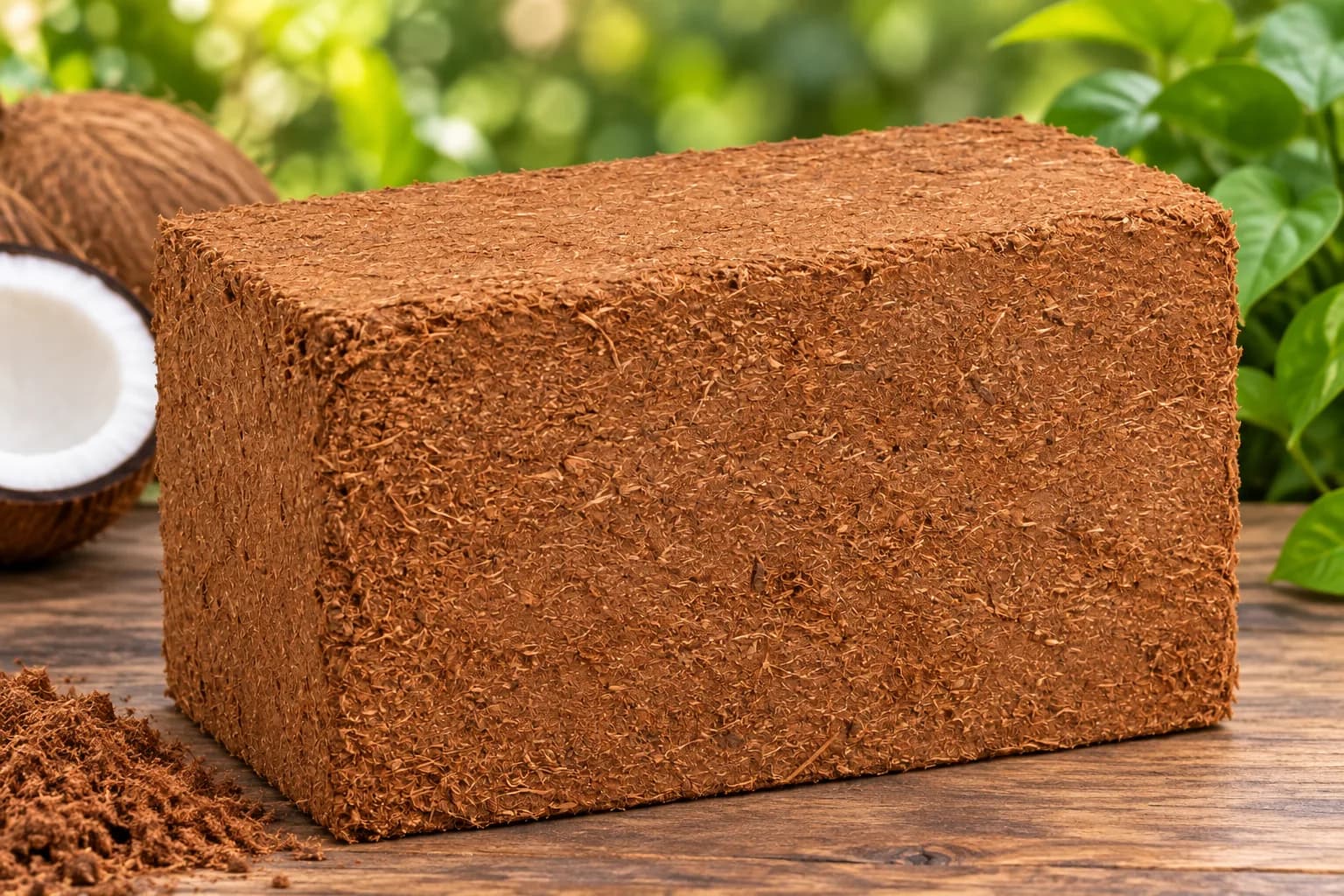
Compressed Coco Peat
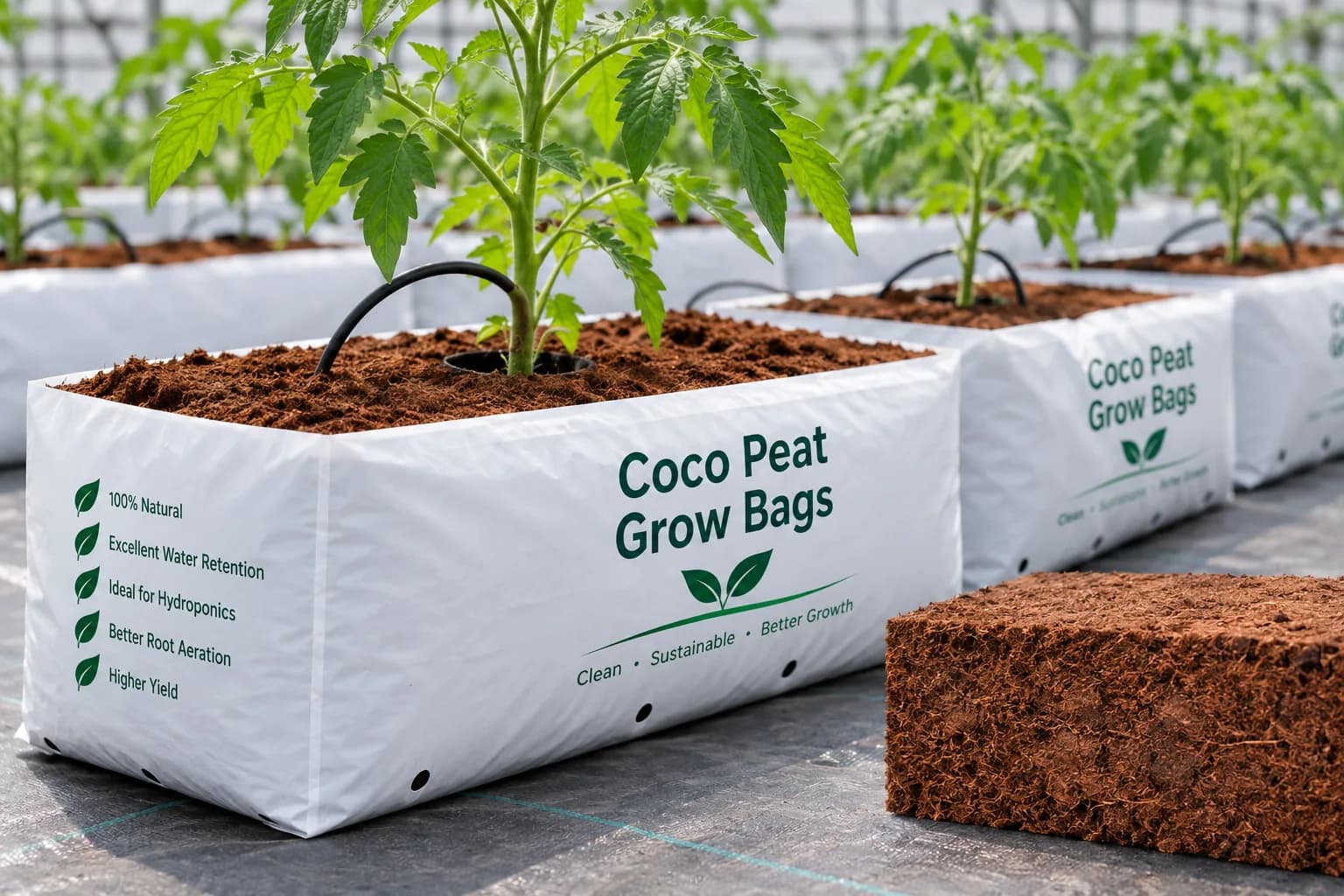
Coco Peat Grow Bags
Where It’s Used
Buyer Applications
- Horticulture
- Greenhouse cultivation
- Commercial growing-media distribution
- Wholesale distribution
Procurement Reference
Available Specifications
| Particle / Mesh Size | 2 – 10 mm typical (fine to coarse grades, confirmed per order) |
|---|---|
| EC (Electrical Conductivity) | ≤ 0.5 mS/cm typical for low-EC washed grade |
| pH | 5.5 – 6.5 (typical range) |
| Moisture (at packing) | ≤ 18% (typical range) |
| Note | Typical industry range — confirmed against the specific lot and buyer requirement before shipment, not a guaranteed specification. |
| Packaging | Shrink-wrapped compressed block, Bulk bale |
| Shelf Life | Non-perishable — stable in dry storage |
| Storage Conditions | Store sealed in a cool, dry, odour-free place away from direct sunlight and moisture. |
| Bulk Supply | Available for bulk and wholesale export orders, subject to product availability |
| Private Label | Available subject to manufacturer capability and order quantity |
| Certifications & Compliance | Certification and compliance requirements can be reviewed based on product and destination market. See our registration certificates → |
| Export Markets | See the regions we're currently building buyer relationships in. View export markets → |
Commercial Notes
What Buyers Usually Need to Confirm
Lead Time
Confirmed after checking current supplier availability, packing format and destination requirements.
Availability
Seasonality, crop position and lot availability can affect what grade or form is practical at quotation stage.
Samples
Available case by case for buyer evaluation; courier cost, sample size and destination restrictions are confirmed before dispatch.
Shipping Terms
FOB India, CFR and CIF can be discussed depending on product, shipment size, destination port and buyer preference.
Shipment Size
Spice orders may move as bulk cartons, LCL or FCL depending on quantity; rice and coco peat are normally reviewed as container-oriented shipments.
Export Documents
Commercial invoice, packing list and certificate of origin are prepared per shipment; COA, phytosanitary certificate or other documents are reviewed against the product and destination.
These notes are product-specific commercial checkpoints, not fixed promises. Final pricing, lead time, documentation and shipment terms are confirmed against the actual lot, supplier, packing and destination before order acceptance.
Importer Quote Pack
Procurement Data Buyers Need Before Quote Approval
These are the operational fields an overseas importer, customs broker or freight forwarder normally needs before moving from interest to quote comparison. Values marked as confirmed are tied to the actual lot, pack format and destination, not generic website promises.
Packing & Container Planning
- Pack Sizes
- Compressed block, Grow bag, Bulk bale / container load
- Export Packaging
- Shrink-wrapped compressed block, Bulk bale — final material, liner and marking confirmed before quote.
- Palletization
- Palletization/container stuffing plan is confirmed against format, compression, bag size, container type and destination constraints.
- Container Planning
- Available on request
- Net / Gross Weight
- Confirmed in the quotation and packing list after final pack size and carton/bag specification are agreed.
Testing & COA Parameters
- Primary Parameters
- EC, pH, moisture, expansion volume, compression ratio, particle size and fibre content.
- Risk Parameters
- Destination phytosanitary, fumigation or plant-quarantine requirements checked before shipment.
- Lot-Level COA
- Reviewed per shipment when required by buyer, product risk and destination market.
- Pesticide / Microbiology / Heavy Metals
- Coordinated with supplier or third-party lab when the buyer or destination requires these tests.
Document Matrix
- Standard Shipment Documents
- Commercial invoice, packing list and certificate of origin.
- Quality / COA
- COA or third-party test report reviewed when required by buyer, product risk or destination market.
- Destination-Specific Documents
- Phytosanitary, fumigation, halal, health certificate or other documents are confirmed only where applicable.
- Coir / Plant-Material Documents
- Phytosanitary, fumigation or treatment evidence is checked against the buyer's import rules and product format.
Traceability & Lot Evidence
- Origin Basis
- Tamil Nadu / Kerala; final lot origin, processor/packer and crop/season context are confirmed at enquiry stage where available.
- Lot Evidence
- Lot number, packing date, milling date where relevant, and supplier documentation are reviewed before dispatch when applicable.
- Pre-Payment Proof
- Specification, packaging, Incoterm, supplier feasibility and document checklist are aligned before payment commitment.
- Pre-Dispatch Proof
- Packing list, invoice details, shipment documents and real operational evidence are shared according to buyer requirement and availability.
MOQ & Order Structure
- Indicative Starting MOQ
- 1 container load (indicative — confirmed per order and destination)
- Bulk / Wholesale
- Available for bulk and wholesale export orders, subject to product availability
- Private Label
- Available subject to manufacturer capability and order quantity
- Samples / Trial
- Samples and small trial quantities are reviewed case by case; courier movement and destination restrictions must be confirmed first.
Decision Speed
Fast Buyer Decision Checklist
Share these in your enquiry to reduce back-and-forth and get a usable quotation faster.
- 1) Product form and grade needed (for example whole vs powder, or target specification row)
- 2) Quantity and packaging format (retail pouch, bulk bag, carton, or container planning)
- 3) Destination country and discharge port, with preferred Incoterm (FOB, CFR or CIF)
- 4) Any compliance requirements (testing, labelling, documentation) to validate before shipment
Need a procurement-ready validation sequence before approving the order? Use the Buyer Proof Center for stage-wise verification checkpoints, then go to buyer resources for the closest product×destination route.
Grade Reference
Grades We Supply
Coco peat and coir pith are supplied across three grades, distinguished primarily by wash/buffer treatment and electrical conductivity (EC) — confirmed against the specific lot before order.
- Low-EC Washed Block
- Washed and buffered compressed block, EC ≤ 0.5 mS/cm — the standard grade for horticulture and greenhouse buyers sensitive to salt content.
- High-EC Unwashed / Raw
- Unwashed raw coco peat, EC roughly 1–3 mS/cm — lower cost, suited to buyers who buffer or blend it themselves before use.
- Coir Pith
- A coarser fibrous byproduct of coir processing, distinct from washed coco peat block — typically used for bulk soil amendment rather than precision growing media.
Buyer Questions
Frequently Asked Questions
- What is the HS code for coco peat and coir pith?
- Coco peat and coir pith are classified under HS code 5305.00.40 — the coir-pith-specific line, not the generic 5305.00.90 "other" bucket. Confirm the exact classification with your customs broker for your specific product form.
- What EC and pH should coco peat have for horticultural use?
- A typical range is EC at or below 0.5 mS/cm for low-EC washed grade, with pH between 5.5 and 6.5 and moisture at packing at or below 18%. High EC (salt content) can interfere with nutrient uptake, so for nursery or hydroponic use, ask for the EC value and whether the material has been buffered.
- What is the difference between coco peat and raw coir pith?
- Coir pith is the raw, ungraded bulk form of the same coconut-husk byproduct, with variable particle size and higher salt content. Coco peat is that material washed, buffered, sieved and compressed into a horticulture-grade growing medium.
- What is a typical minimum order for coco peat?
- A full container load is a typical indicative starting point, supplied as shrink-wrapped compressed blocks or bulk bales — coco peat is volume-limited rather than weight-limited, so container yield depends on compression and format.
Market and Variety Pages
Buyer Guides
Product Guide
Coco Peat vs. Coir Pith: What's the Difference?
Coco peat and coir pith come from the same coconut husk byproduct, but they're not interchangeable. Here's what separates them and which one fits your use case.
Product Guide
Coco Peat Export Guide: Specifications, Packing and Documents
What an importer should agree before buying coco peat from India: EC and pH, washing and buffering, block formats, container loading, testing and the documents that usually apply.
Buyer's Guide
MOQ and Container Loads for Spice & Agri Exports
How MOQ actually works for Indian spice and agri exports — LCL vs FCL, bag sizes, container yield math, and how packaging changes your minimum order.
Compliance Reference
Importing Spices and Agri Products into Australia: Biosecurity Basics
A general orientation to Australia's biosecurity import conditions for spices, rice and coco peat — why BICON matters and treatment may be required.
Compliance Reference
Southeast Asia Import Requirements for Spices and Agri Products
A general orientation to import requirements across Southeast Asian markets for spices and agri products, and why country checks still matter.
Buyer's Guide
Incoterms for First-Time Spice Importers
A plain-language guide to FOB, CFR, and CIF for spice importers from India — what each term includes, and why the same price can mean different costs.