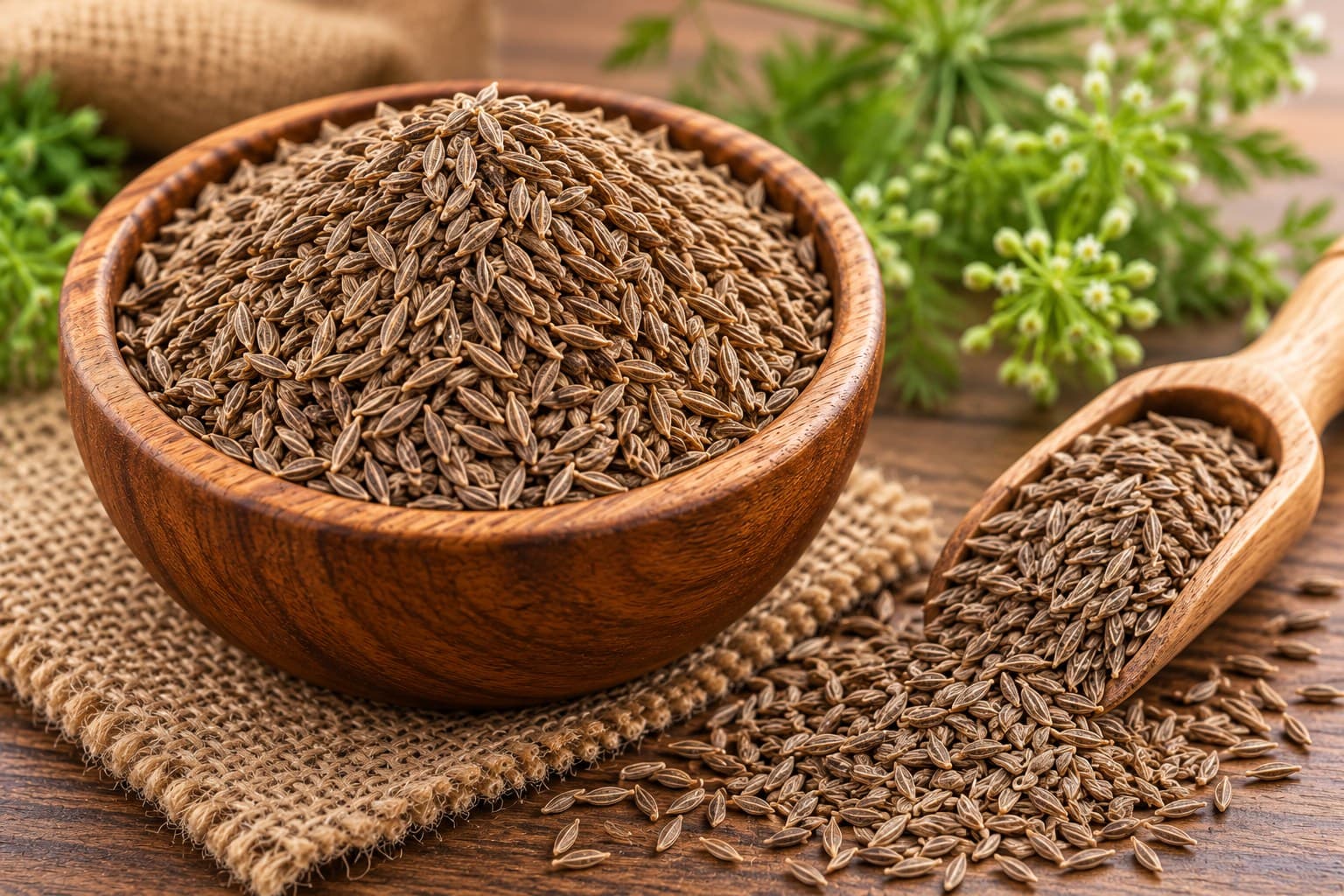
Buyer's Guide
Cumin Seeds from India: Grades, Uses, and What to Check
Cumin trades on aroma more than almost any other spice in this range, which makes it one of the easier products to misjudge from a spec sheet alone. Here's what actually separates a usable cumin specification from a vague one.
Sourcing this product? See our Cumin product page for specifications, HS code and MOQ.
Where It's Sourced and Why That's Worth Asking
Cumin is traded heavily through the Unjha belt of Gujarat, one of India's principal cumin-trading hubs, alongside growing regions in Rajasthan. Unjha functions as much as a trading and processing centre as a growing region, so it's worth asking a supplier not just where the seed was traded but where it was actually grown — the two aren't always the same place, and growing conditions are what actually shape aroma and oil content.
The Numbers That Matter
| Parameter | Typical Range |
|---|---|
| Moisture | ≤ 10% |
| Volatile oil | ≥ 2.5% |
| Purity | ≥ 99% |
| Foreign matter | ≤ 1% |
Volatile oil is the figure most directly tied to aroma strength and is the one buyers most often forget to request — a cumin lot can look visually fine and still fall short on the smell and taste that actually matters in a finished product. These are typical ranges for the crop and season, not a guarantee for every lot; ask your supplier to confirm the actual figures for the specific batch you're buying.
Whole Seeds vs. Ground Powder
Whole cumin seeds hold their volatile oil and aroma considerably longer than ground powder, which is why most bulk and food-manufacturing buyers import whole and grind closer to point of use. If you need ground cumin, ask about the milling date and how it's been stored since — cumin powder loses aromatic intensity faster than many other ground spices, and a supplier who can't answer either question is likely selling older stock than the shipment date suggests.
Getting Started
As with other spices in this range, a first order around 100 kg is a common trial quantity, packed in retail pouches or bulk PP bags depending on volume, with destination and packaging format determining how that scales toward a full container — worth reading alongside our MOQ and container load guide before finalizing a quantity.
Frequently Asked Questions
- Where does Indian export cumin come from?
- Cumin is traded heavily through the Unjha belt of Gujarat, one of India's principal cumin-trading hubs, alongside growing regions in Rajasthan. Unjha is as much a trading and processing centre as a growing region, so it's worth asking where the seed was actually grown, not just traded.
- What quality parameters should a cumin specification include?
- At minimum: moisture (≤ 10%), volatile oil (≥ 2.5%), purity (≥ 99%) and foreign matter (≤ 1%). These are typical ranges for the crop and season — a credible supplier confirms the actual figures for your specific lot before shipment.
- Should I import whole cumin seeds or ground powder?
- Whole seeds hold their volatile oil and aroma considerably longer than ground powder, which is why most bulk buyers import whole and grind closer to point of use. If you need ground cumin, ask for the milling date and how it's been stored since.
- What is a typical minimum order quantity for cumin?
- A first order around 100 kg is a common trial quantity, packed in retail pouches or bulk PP bags depending on volume, with destination and packaging format determining how that scales toward a full container.
Related Reading
Buyer's Guide
MOQ and Container Loads for Spice & Agri Exports
How MOQ actually works for Indian spice and agri exports — LCL vs FCL, bag sizes, container yield math, and how packaging changes your minimum order.
Reference
Spice Grading Terms Glossary
Plain-language definitions of common spice grading terms — SHU, volatile oil, bulk density, foreign matter, and more — for buyers reading a supplier spec sheet.
Product
Cumin
Cumin seed exporter from India — whole seeds and ground powder
Get Started
Request a Product Quotation
Share your product requirements, quantity, destination and packaging preferences — we’ll come back with specification, availability and next steps.